
Nowy ambulans Mercedes-Benz SPRINTER INFECTION TYPE AMBULANCE


Jeśli zdecydowałeś się na zakup pojazdu w niskiej cenie, upewnij się że konwersujesz z prawdziwym dealerem. Dowiedz się czegoś więcej o właścicielu pojazdu. Jeden ze sposobów oszustwa – podać się za realnie istniejącą firmę. Gdy podejrzewasz oszustwo, zgłaszaj je w formularzu kontaktowym dla przeprowadzenia dodatkowej kontroli.
Zanim dokonasz zakupu, uważnie zapoznaj się z kilkoma ofertami sprzedaży, aby poznać średnią wartość wybranego modelu. Jeśli cena wybranej przez Ciebie oferty jest znacznie niższa od analogicznych ogłoszeń, warto się zastanowić. Znacząca różnica w cenie może świadczyć o ukrytych defektach lub o próbie oszustwa przez sprzedającego.
Nie kupuj pojazdu, którego cena znacznie różni się od średniej ceny za analogiczny sprzęt.
Nie zgadzaj się na płacenie zadatku za towar. W razie wątpliwości nie bój się pytać o szczegóły dotyczące ogłoszenia, poprosić o dodatkowe zdjęcia i dokumenty pojazdu. Sprawdzaj ich poprawność i zadawaj dodatkowe pytania.
Najbardziej rozpowszechniony typ oszustwa. Nieuczciwi sprzedawcy mogą prosić o wpłatę zadatku dla "rezerwacji" twojego prawa na zakup pojazdu. W ten sposób oszuści gromadzą duże kwoty i znikają, przestają odbierać telefon.
- Transfer zadatku na kartę
- Nie wpłacaj zadatku bez dokumentów, które miały by potwierdzić przekazanie środków, jeśli podczas współpracy sprzedający wzbudza podejrzenia.
- Transfer na konto "zaufanej osoby"
- Podobna prośba powinna wzbudzić podejrzenia, prawdopodobnie konwersujesz z oszustem.
- Transfer na konto firmy o podobnej nazwie
- Bądź czujny, oszuści mogą maskować się pod znane firmy, wprowadzając nieznaczne zmiany do nazwy. Nie przesyłaj środków jeśli nazwa firmy wzbudza podejrzenia.
- Podstawienie własnych danych do przelewu w fakturze realnej firmy
- Zanim zrealizujesz płatność, upewnij się o prawdziwości podanych danych do przelewu i czy na pewno należą do tej firmy.
Kontakt do sprzedającego

 +90 545 558...
Pokaż
+90 545 558 23 24
+90 545 558...
Pokaż
+90 545 558 23 24
 +90 531 791...
Pokaż
+90 531 791 81 41
+90 531 791...
Pokaż
+90 531 791 81 41

 +235 64 27 ...
Pokaż
+235 64 27 54 45
+235 64 27 ...
Pokaż
+235 64 27 54 45


 1 500 kg
Liczba miejsc
1 500 kg
Liczba miejsc
 3+3
Turcja
3+3
Turcja


 3 000 kg
Liczba miejsc
3
3 000 kg
Liczba miejsc
3
 Emiraty Arabskie, Dubai


 2
Emiraty Arabskie, Dubai
2
Emiraty Arabskie, Dubai


 4 500 kg
Liczba miejsc
3
Turcja
4 500 kg
Liczba miejsc
3
Turcja


 Turcja


 4 500 kg
Liczba miejsc
3
Turcja, Ankara
4 500 kg
Liczba miejsc
3
Turcja, Ankara


 6 000 kg
Emiraty Arabskie
6 000 kg
Emiraty Arabskie


 3 000 kg
Turcja, Ankara
3 000 kg
Turcja, Ankara


 Turcja, Ankara


 Turcja, Ankara


 1 500 kg
Turcja, Ankara
1 500 kg
Turcja, Ankara

 Turcja, Ankara


 Emiraty Arabskie

 Turcja


 Turcja, Ankara

 2 800 kg
Liczba miejsc
3
Turcja, Ankara
2 800 kg
Liczba miejsc
3
Turcja, Ankara


 15 000 kg
Emiraty Arabskie
15 000 kg
Emiraty Arabskie


 5
5
 Francja, Saint-Nicolas-de-Port


 5
Turcja
5
Turcja


 Turcja, Tuzla / ISTANBUL


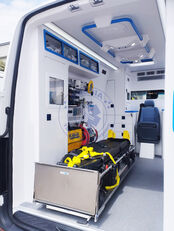
The Ambulancemed company has developed these vehicles to immediately respond to epidemics and to transport patients or people with symptoms in isolation. It is one of our most preferred vehicles especially in African countries.
This model can be further developed with the equipment in the direction desired by the users and the desired equipment can be installed.
In addition, our infection model ambulance can be applied to the desired models independent of vehicle brand and model.
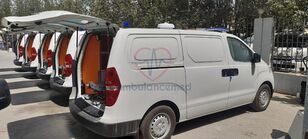
Infection Type Ambulance is specially designed for the transportation of infected patients (who have contagious diseases like Corona, BSL-4, Ebola, SARS, Mers, Avian Flu, Swine Flu (H1N1) in the best possible high isolation.
Negative pressure and desired air circulation are created in the patient compartment by the use of air-sucking-fans.
Circulated air is passed through the HEPA filters to decontaminate the air used in the compartment and some of it blew out of the ambulance while some of it blew through the compartment again as clean air.
So it is provided that the infected patient is carried in safe with no harm to the outside environment and the ambulance crew by use of negative pressure and the desired air circulation.
Desired air circulation is that the air blew into the compartment dominates the rising air from the flooring and that sucked by the fans so that always decontaminated air is present just above the patient.
Infection Type Ambulance
Patient compartment pressure can be lowered to 260 pascals forcing the contaminated air to move through the filters and so that is provided the best possible air circulation creating maximum safety inside the compartment.
Corona, Ideally, the pressure inside the compartment can be adjusted to 100 Pascal.
For ensuring a long-lasting hygienic environment, the number of 0.3-micron size particles is kept below 2.000.000. ( in tests done in the development phase.
It is observed that the number of particles of o3 micron is around 10.200) Two echelon filtration (FT-H13 HEPA filters) system is used for the air circulation inside the compartment.
The airflow rate of the HVAC system used in the compartment for air circulation is max. 1800 m3/h and can be adjusted to the required values. Corona,
With the use of high-tech automation systems, temperature, humidity, pressure and particular parameters can be adjusted by the crew responsible. The risk of spreading the contaminated air outside is eliminated by using specially designed Ambulancemed Guard Filters.
The decontamination rate of 99.95 % is reached with the use of F9 and H13 filters. There are 2 filters of Guard HEPA filters on the left and right side of the compartment.
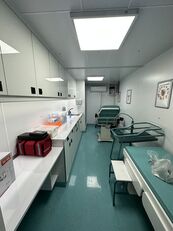
Cooling and heating systems are protected against bacteria and viruses by using HEPA filter systems. Corona, All the material and equipment used inside the compartment have rounded corners for easy decontamination and are long-lasting products.
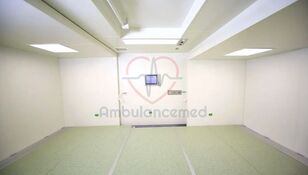
Epoxy floor covering is special for preventing bacteria and virus populations from growing and easy to decontaminate.
It has long-lasting usage life and not affected by decontamination solutions (Formaldehit Paraformaldehit-H2O2) The patient compartment is designed to comply with the requirements of the TS EN 1789 standard. All the standard ambulance medical types of equipment are located in patient cabins.